
The Environment
The Tyvy Montessori
Prepared
Environment
The Montessori classroom is a carefully prepared, child-friendly environment where everything has a purpose and place. Accessible materials and child-sized furniture encourage curiosity, independence, and a love of learning..
The child has other powers than ours, and the creation he achieves is something miraculous.
The room
The Montessori Classroom
is a
Prepared Environment
The Montessori classroom is known as the prepared environment because it is purposefully prepared by a trained Montessori educator to create the optimal learning environment for children. The classroom itself is neutral, open-plan, and has a distinct sense of order, beauty and harmony. Everything has a purpose and a place.
The wonder of Montessori learning is clearly evident when you see children interact with the prepared environment. You won’t see a teacher directing a Montessori lesson at the front of the classroom, or all students simultaneously seated at individual desks.
Instead, you will see children moving freely around the classroom, choosing their own activities, and working individually or in small groups. They may choose to work at a table, or on the floor, with a small mat to clearly delineate their workspace.
Similarly, you won’t see a teacher hovering over children correcting their work. Instead, you will see educators standing back, keenly observing their students, and only stepping in to assist when needed.
Children are able to deeply engage in their own learning, progress at their own pace, and discover learning outcomes through repetition and practice. Learning in the Montessori environment is largely active, individually paced, often self-correcting, and completely tailored to the needs and interests of each individual child. This approach ensures that every aspect of the prepared environment aligns with Montessori principles, fostering independence, confidence, and a lifelong love of learning.
Come and see a work period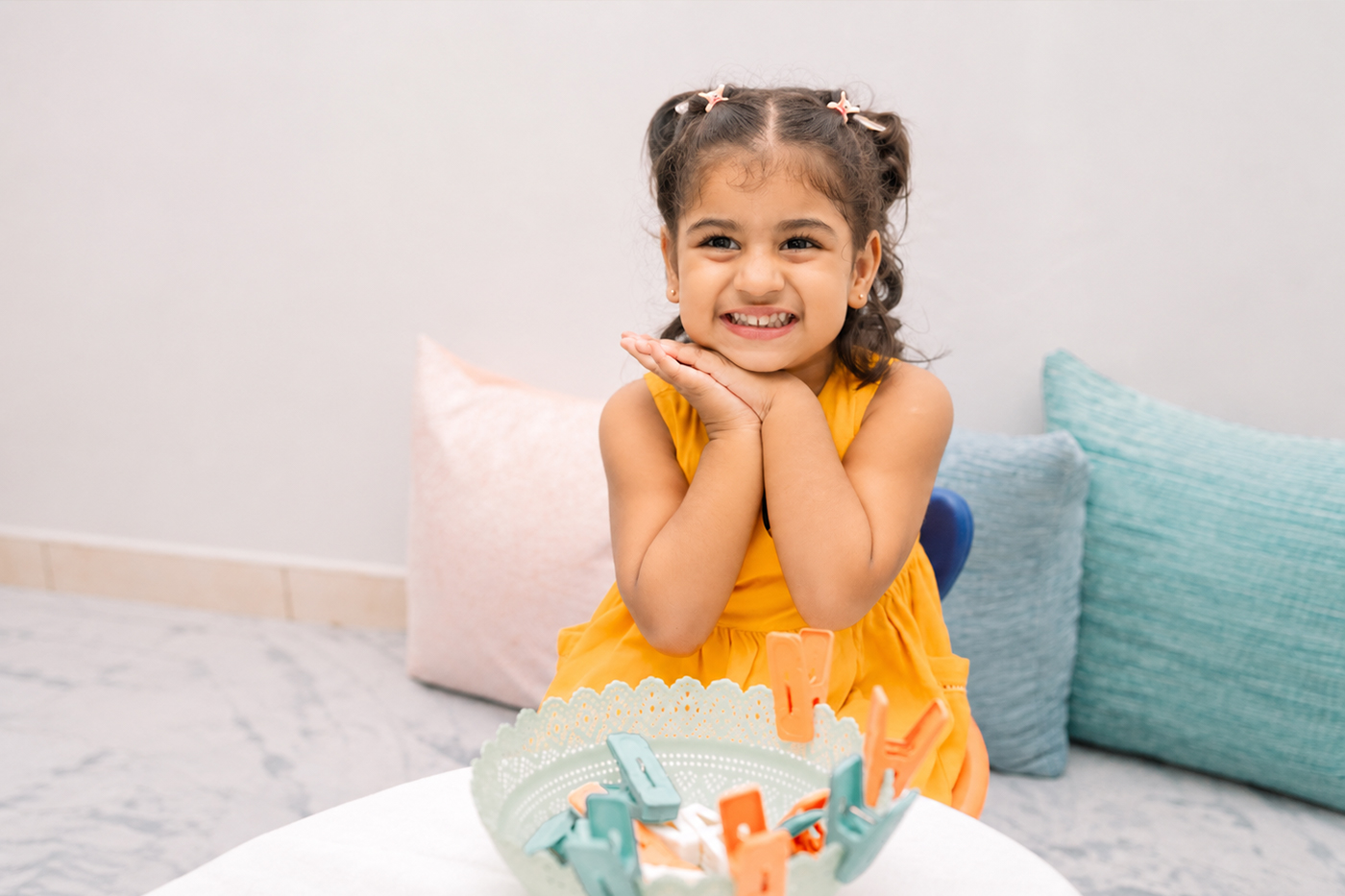
Features of the Prepared Environment
- Structure and order
- Clearly defined curriculum areas
- Materials are displayed in progression order
- Left to right orientation
- Freedom of movement and choice
- Emphasis on independence
- Freedom within limits
Features
The Prepared Environment
Order
The prepared environment is a calm and structured learning space where children know what to expect. There are dedicated shelves of materials for each curriculum area, designated space to work at a table or on the floor, an area for meal times, and the ellipse where the children gather together. There is an organic flow for movement, learning, and exploration.
Child-Sized
Doctor Montessori observed that children experience frustration in an adult-sized world. This is why she designed child-sized furniture, accessible low open shelves, and learning materials that easily fit in a child’s hand. Everything in the prepared environment is purposefully designed to support children’s independence and self-mastery.
Beauty
Montessori classrooms are clean, orderly, and have a neutral colour palette. The environment is largely crafted from natural materials, organised, and beautifully displayed with care and thought. There are minimal vibrant colours on the wall, art is neatly displayed in a dedicated space, and there is no central focal point.
Real
The Montessori approach emphasises the use of real-life objects in the classroom. This includes using real photographs of animals and objects, as opposed to cartoons, and using ceramic bowls and metal utensils over plastic substitutes. The reason for this is to provide children with real-life learning experiences that build their confidence and competence for real-life situations.
Freedom and Choice
Within the prepared environment children experience freedom of movement, freedom of choice, and freedom of time. Students are able to follow their own interests, work with an activity for as long as they choose, and work how and where they like.
Stability
The Montessori classroom is a stable learning environment that rarely changes. Shelves and furniture rarely move so that children always know where to find them and where they belong. This stability assists children in developing a sense of security and familiarity with the environment. The core Montessori materials do not change; however, new activities, particularly in the area of practical life, are often introduced to reflect children’s interests.
Left to Right Progression Order
In the prepared environment, the Montessori materials are grouped by their curriculum area, and displayed from left to right in progression order, from easiest to hardest. This logical structure provides a clear pathway for learning.
Harmony
There is a distinct sense of peace and harmony in the prepared environment. Students move carefully, define their work space, and respect each other’s work. The children instinctively work together to create a harmonious classroom community that is essential to learning, concentration, and exploration.
Freedom within Limits
Freedom within limits refers to the ground rules of the prepared environment. Children have the freedom to follow their own interests, move freely, and choose their work, as long as their behaviour is reasonable and acceptable.
Independence
The prepared environment provides children with a safe place to explore and develop their independence. Children’s independence is supported through the structure of the prepared environment, the Montessori materials, the curriculum areas, and the guiding role of the educator. Children are actively encouraged to do and think for themselves.
Community
A Classroom That
Works
as a Community
Montessori was among the first to link how a child feels to how well they learn. She called her early classrooms Children's Houses, places where children belonged and were responsible for the room they shared.
That responsibility is practical. Children set the table for lunch, serve each other, wipe up spills, water plants, and tidy a material before the next child takes it. Grace and courtesy are taught as deliberately as anything else on the shelf, from greeting a visitor to interrupting politely.
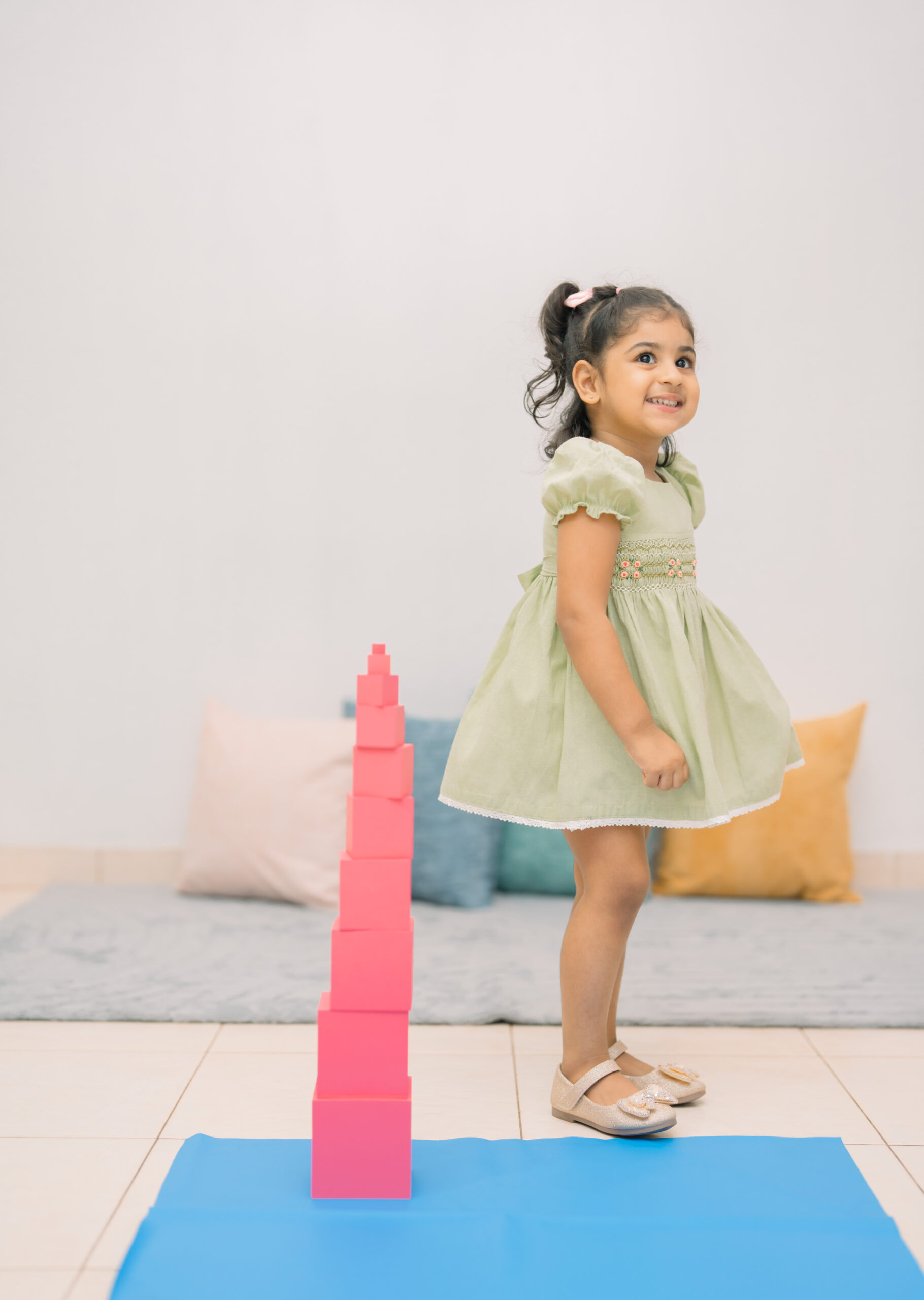
Because there is only one of each material, turn-taking is genuine rather than enforced. A child who wants the Pink Tower waits for it, and learns to respect someone else's work because the situation makes the reason obvious.
The layout
How the Room Is Organised
The floor plan follows the curriculum, with each area given its own defined space.
Practical Life
Nearest the entrance and the water. Pouring, sweeping, food preparation, and care of the room, with everything a child needs to clean up after themselves.
Sensorial
Open floor space for the larger materials, so a child can build the Pink Tower or lay out the Brown Stair without being stepped over.
Language and Mathematics
Quieter corners with low tables and mats, close to the reading area, where longer stretches of concentration are easiest to protect.
Culture and the Gathering Space
Maps, plants, art, and the ellipse where the class comes together for group time at the end of the work cycle.
Where to next
Montessori Materials
The shelves are the part visitors ask about most. Next: what the materials are, how they are designed, and why each one teaches a single thing.
Still curious?
See the Method in Practice
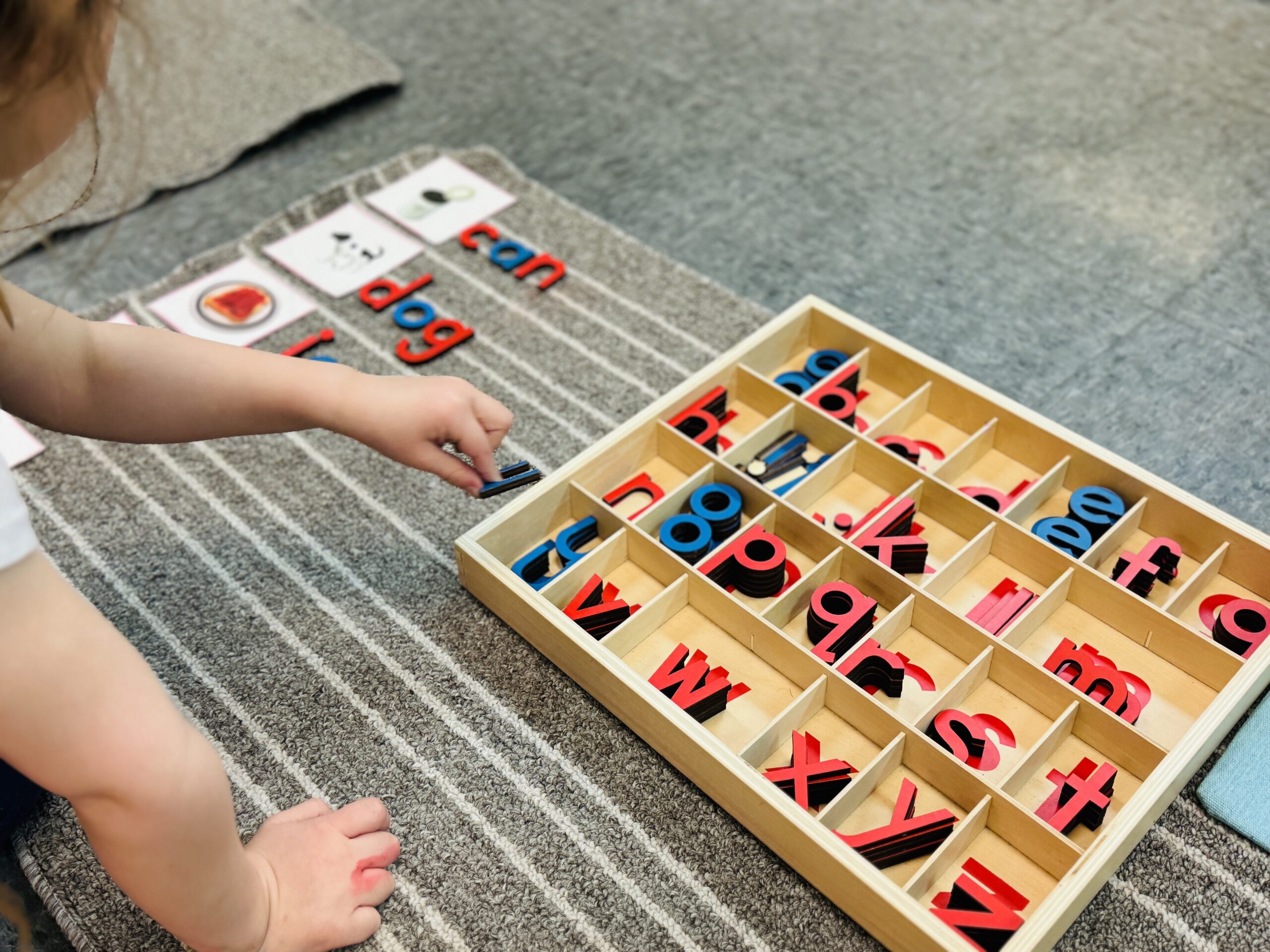
Reading about Montessori only gets you so far. Come and watch a work period, and bring every question you have.
Book a Tour