The Curriculum
Explore the Tyvy
Montessori
Curriculum
The Montessori Curriculum includes five key learning areas: Practical Life, Sensorial, Mathematics, Language, and Culture. Through hands-on materials, repetition, and practice, children build essential skills and a strong foundation in each area.
Never help a child with a task at which he feels he can succeed..
What it is
How Does the Montessori
Curriculum
Work?
The Montessori Curriculum offers children five key areas of study: Practical Life, Sensorial, Mathematics, Language, and Cultural Studies. Each area of study is made up of a set of educational materials that increase in complexity. Children progress through the Montessori Curriculum at their own pace based on their stage of development and interests.
Montessori educators present key lessons to introduce children to the name and learning outcomes of each Montessori material. After a Key Lesson, the children work with the Montessori material independently to practice, explore, and make connections to the key learning outcomes.
During this time, Montessori educators stand back, observe how the children are learning, and document their progress. An educator will only intervene if needed, to encourage children’s independence, as there is a direct link between children’s sense of empowerment and their ability to learn and retain new skills and information.
New lessons are provided when a child is ready to progress to the next stage. Through repetition and practice, children master the progression of the Montessori materials, and develop a fundamental understanding of each curriculum area.
See our programmes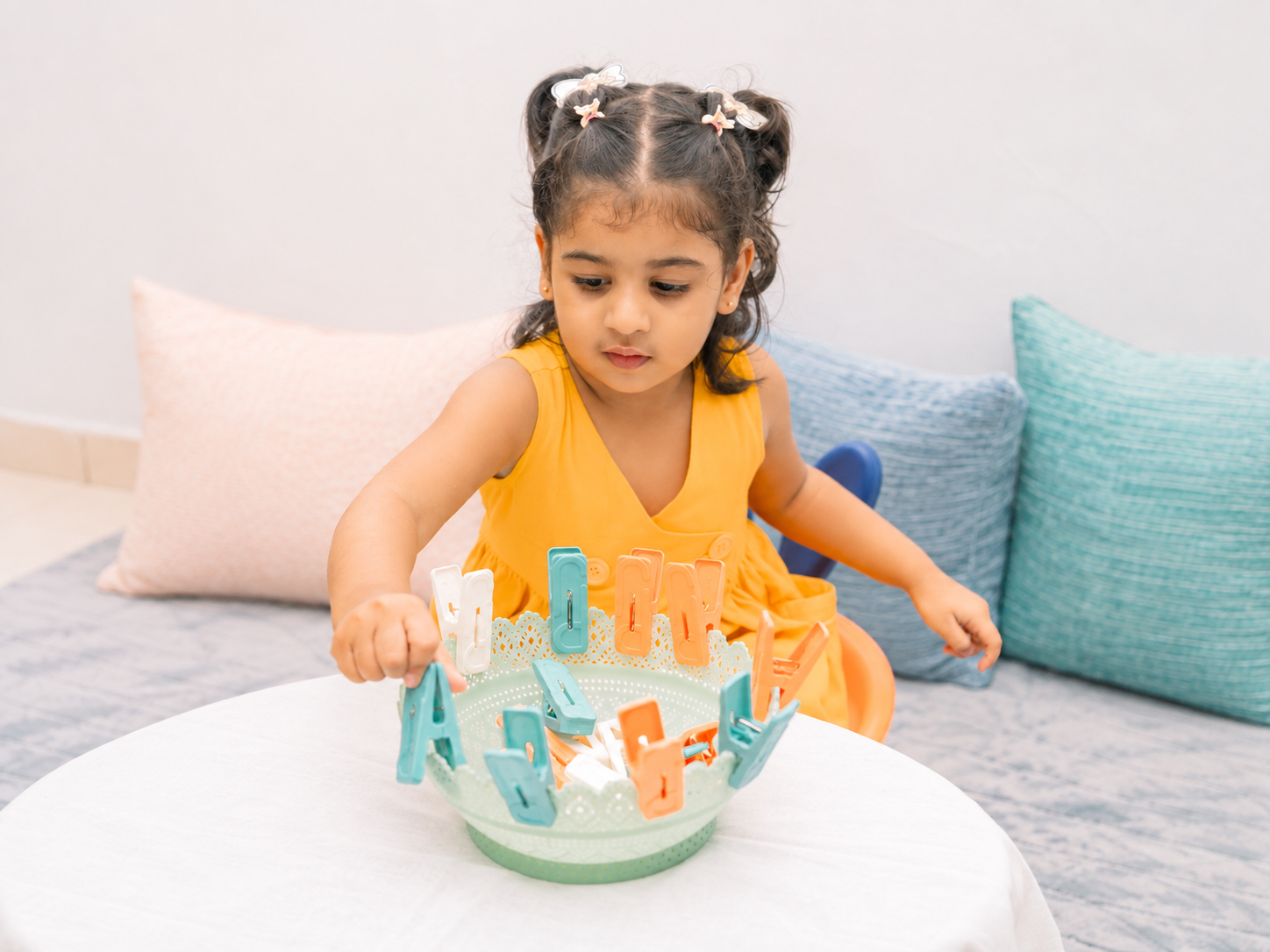
Key Curriculum Areas
- Practical Life: Independence, social skills and care for the environment
- Sensorial: Colours, shapes, textures, weights, dimension, discrimination and distinguishing between smells, taste and sound
- Mathematics: Numbers, quantities, counting, addition, subtraction, decimal system, multiplication and division
- Language: Oral language, phonics, letter formation, sentence structure, vowels and consonants, writing, reading and early literacy skills
- Culture: Geography, botany, zoology, science, history, music and art
Five areas
The Five Areas of the Montessori Curriculum
Practical Life
The Montessori Practical Life Curriculum incorporates exercises and activities that children observe in daily life. These activities develop children’s independence, concentration, and fine motor skills. Typical practical life activities involve transferring, food preparation, lessons in grace and courtesy, and cleaning.
Example materials and activities include:
- Spooning
- Pouring
- Threading
- Sorting
Sensorial
Sensorial activities teach children to refine their senses of sight, touch, sound, smell and taste so that they are able to organise sensory impressions and their understanding of the world. Through sensorial materials, children learn about similarity and difference, dimensions, colours and shapes, and distinguish between smells, taste and sound. Sensorial work also prepares children for mathematics, language and geometry by teaching children how to classify and sort.
Example materials and activities include:
- Pink Tower
- Cylinder Blocks
- Colour Box
- Geometric Solids
Mathematics
The Mathematics Curriculum teaches children to understand abstract mathematical concepts and relationships through hands-on learning experiences. Children learn to count, identify and match numerals to their quantity, relate decimal quantities and symbols, and become aware of the functions of addition, subtraction, multiplication and division by using the Montessori materials.
Example materials and activities include:
- Cards and Counters
- Sandpaper Numbers
- 11–19 Teen Boards
- 100 Board
Language
The Montessori Language Curriculum provides children with the knowledge and skills to build their vocabulary and understanding of language. The skills required for reading, writing and oral language are developed through hands-on experience using the Montessori language materials. Children learn letter sounds (phonics), letter identification and formation, how to combine sounds to make words, how to build simple sentences, and how to properly hold a pencil. Oral language skills are developed through daily social interactions, group time experiences, and lessons in grace and courtesy.
Example materials and activities include:
- Sandpaper Letters
- Moveable Alphabet
- Metal Insets
- Phonogram Box
Culture
The Culture Curriculum incorporates a wide range of subjects, including: Geography, Botany, Zoology, Science, History, Music and Art. Through explorations of culture, children develop an understanding of their community, their world, and their social responsibilities. Children learn to respond to diversity with respect, appreciate music and art, and develop awareness of sustainability.
Example materials and activities include:
- Land and Water Forms
- Puzzle Maps
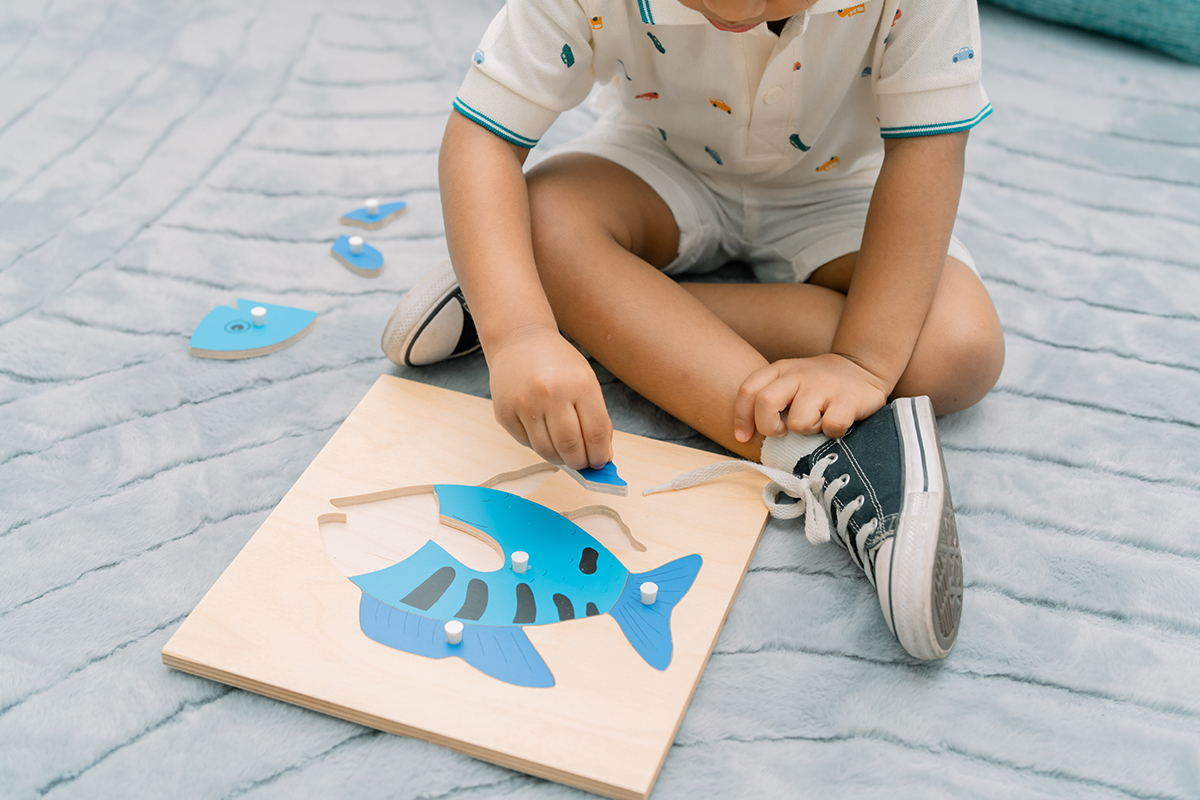
- Life Cycle Puzzle and Activities
- Botany Cabinet
How It Fits Together
Practical life steadies the hand, sensorial sharpens the eye, and both make language and mathematics possible. Culture gives all of it somewhere to point.
The work cycle
Three
Uninterrupted
Hours
The curriculum is delivered inside a long, unbroken work period rather than a series of short lessons. A child chooses from the materials they have already been shown, settles into one, and stays with it for as long as their interest holds.
Educators spend that time observing. They give a presentation of a new material at the moment a child is ready for it, then step back. Because the presentation is individual or given to two or three children at once, nobody sits through a lesson they do not need.
Progress is tracked child by child against the sequence, so we always know which materials a child has been shown, which they have mastered, and what comes next.

Where to next
Montessori Principles
The curriculum makes most sense alongside the principles behind it: the absorbent mind, sensitive periods, auto-education, and freedom within limits.
Still curious?
See the Method in Practice
Reading about Montessori only gets you so far. Come and watch a work period, and bring every question you have.
Book a Tour